Archives For Commuter Rail

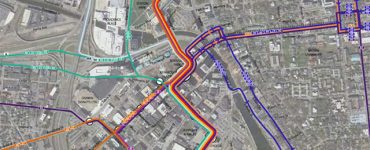
nec_study_area_map

Federal Railroad Administration is running a planning program of future needs along the Northeast Corridor rail system and encourages public input:

Welcome to NEC FUTURE, a comprehensive planning effort to define, evaluate and prioritize future investments in the Northeast Corridor (NEC), launched by the Federal Railroad Administration (FRA) in February 2012. FRA’s work will include new ideas and approaches to grow the region’s intercity, commuter and freight rail services and the completion of an environmental evaluation of proposed transportation alternatives.

The NEC, the rail transportation spine of the Northeast region, is a key component of the region’s transportation system and vital to its sustained economic growth. Today, the 457-mile NEC—anchored by Boston’s South Station in the north, New York’s Pennsylvania Station in the center, and Washington’s Union Station in the south—is one of the most heavily traveled rail corridors in the world.

Visit NEC Future to submit your comments.


See also: ProJo: Agency explores methods to expand rail service to D.C.

flickr-train-luxembourg-bindonlane

DMU train in Luxumbourg. Photo (cc) bindonlane

This post was submitted Greater City: Providence reader Peter Brassard. If you’ve written something you’d like us to consider posting, please contact us and let us know.

Rhode Island’s commuter rail service as currently conceived may not be conducive to encouraging ridership. Distances between existing and proposed stations are too far. Much of the focus has been on extending the system further into low-density suburbs. For Rhode Island commuter rail to succeed, more needs to be done to take advantage of existing walkable urban neighborhoods that have a high potential for passengers. Some of these areas have large amounts of commercial/industrial space or development opportunities. Due to Downtown Providence expansion, the rail system will be challenged, as long as there’s no internal downtown high-frequency transit, such as the proposed Core Connector, to directly link rail passengers to the far reaches of downtown.

Rhode Island’s commuter rail doesn’t capitalize on density variations and neighborhood assets of the Providence area. If Rhode Island’s commuter rail functioned as a rapid mass-transit system, besides increasing the number of passengers, it would help to revitalize and expand development opportunities for neighborhoods along the rail line. The implementation of medium frequency shuttle train service within the Rhode Island instate rail corridor would offer predictable headway times at regular intervals that could operate in addition to MBTA commuter and Amtrak trains. Air and intercity train travelers, commuters, and the general public would greatly benefit from this level of service.

A variation to a commuter rail or shuttle train is the German S-bahn or French RER or San Francisco’s BART. An S-bahn type system is usually the same as commuter rail in suburban areas, but differs when it’s within the central urban core, where it has characteristics of a subway or metro. Usually stations within the core zone are located close together at quarter- to half-mile subway station distances and schedule headway times typically fall somewhere in the middle of commuter rail and subway schedules. Depending on the city, central core rail infrastructure can be underground or at grade utilizing existing rail corridors. A hybrid of a shuttle train and an S-bahn might be best for Rhode Island.

Continue Reading…

New London

Amtrak train at New London Station. Photo (cc) mjpeacecorps

The Day of New London editorialized this week about our new train service to Wickford Junction. The gist of the editorial being they like more trains and want even more. Currently, New London is stuck in a bit of a train void, Shore Line East service to New London does not run on weekends, and at this point neither does MBTA service to Wickford Junction. Nonetheless, a weekday drive from New London to Wickford Junction, parking in the garage, and a ticket to Boston cost less than either driving straight through, or paying for direct Amtrak service from Boston to New London.

New Londoners seem pleased that at the Wickford Junction ground breaking, MBTA officials expressed optimism for extending service further south the Westerly, which would put MBTA commuter rail service within 15 miles of New London. At the same time, weekend Shore Line East service to New Haven from New London is set to start in a year (putting Westerly within 15 miles of commuter rail service to New Haven and New York).

Meanwhile, The Herald News of Fall River reports that officials in Bristol County, Massachusetts are a little miffed that we’re getting commuter rail service built deeper into Rhode Island while Fall River, Taunton, and New Bedford still lack commuter rail service. Though Mass. State Sen. Michael Rodrigues is realistic about the issues involved.

Continue Reading…

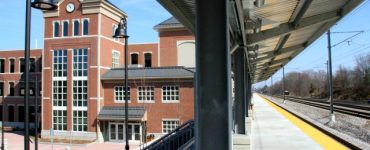
Wickford Junction Station

Wickford Junction Station, photo via RIDOT

RIDOT announced today commuter rail service to the new Wickford Junction Station in North Kingstown will start on April 23rd. The station will be served by 20 trips per weekday to T.F. Green, Providence, and points north. Travel times being 15 minutes to Warwick, 35 minutes to Providence, and under two hours to Boston’s South Station.

“Expanded commuter rail service to Wickford is just over two weeks away,” said RIDOT Director Michael P. Lewis. “This additional service has been highly anticipated and should help alleviate congestion on our roadways.”

Continue Reading…

Boston.com: MBTA unveils 23 percent fare hike; limited service cuts also proposed

MBTA riders would pay an average of 23 percent more and most service cuts would be spared under a budget-balancing plan that will be announced this morning by the T, the state’s top transportation official said in an interview.

The changes, to take effect July 1, are significantly less severe than the two proposals unveiled by the T in January and widely criticized at hearings throughout Greater Boston in recent months. Those proposals would have relied entirely on fare increases and service cuts to make up the $160 million deficit the MBTA faces for the upcoming budget year.

No word yet on what will happen to Commuter Rail service.


See also: MBTA.com: Fare and Service Changes: MBTA Staff Recommendation

P5101154

Photo (cc) EdKopp4

From RIDOT

RIDOT to Hold Meeting on Proposed MBTA Fare and Service Changes

February 10, 2012

The Rhode Island Department of Transportation (RIDOT) announced today that it will hold a public meeting on Monday, February 27, 2012, to discuss the proposed changes to the Massachusetts Bay Transportation Authority (MBTA) fare and service schedule.

The meeting will take place from 6 to 8 p.m. in the Atrium at the Rhode Island Department of Administration, One Capitol Hill, Providence. RIDOT will facilitate a discussion between the public and representatives from the MBTA, who will be on hand to present the plan and answer questions.

Facing a serious revenue shortfall, the MBTA has introduced a proposal to increase fares by an average of 35 to 45 percent and to eliminate service on many of its transit lines. In Rhode Island, this would affect the Providence/Stoughton line, which provides commuter rail service to Providence and T.F. Green Airport.

Under the plan, service at these stations would be eliminated on weekends, and on weekdays after 10 p.m. Rhode Island would lose four weekday stops and 19 weekend stops.

More information about the MBTA’s proposal can be found at its website.

News & Notes

gcpvd —  January 13, 2012 — 11 Comments

Streetcar Shuffle

Seattle Streetcar, photo (cc) kcl_in_pdx

→ Pedestrian Observations: Improving the MBTA

The MBTA has a problem. And I say this coming from New York, whose standards for good regional transit aren’t all that high, but now Metro-North looks like something to look up to from the MBTA. Ridership on the system is rising, but not very quickly; the MBTA moreover has no plans to modernize. Most of what I’m going to suggest will involve commuter rail, not because it’s the most important portion of Boston’s public transportation but because it’s the part I’m most familiar with and also the part that seems most direly in need of improvements. Put another way, I’m necessarily going to talk about the MBTA as perceived from Providence, rather than from within Boston.


→ Fast Lane: American streetcar projects creating jobs today, livable communities and economic development tomorrow

Federal Transportation Secretary Ray LaHood on streetcars:

Today, streetcars in New Orleans and Tucson are under construction. Dallas, Atlanta, and Salt Lake City are currently designing their own streetcars. Tampa extended its popular TECO Line Streetcar System, which has already created billions of dollars in economic development. And Cincinnati will break ground very soon on the Queen’s City’s unique streetcar project.

It’s simple: this streetcar revival means greater mobility and more American jobs. DOT will continue to improve public transit services by supporting these critical projects that create jobs today and livable communities and economic redevelopment tomorrow.


Continue Reading…

MBTA

MBTA Commuter Rail train at Providence Station. Photo (cc) willismonroe

If the MBTA’s proposals for fare increases and service cuts [.pdf] come to pass, we could be not seeing trains after 10pm or on weekends at Providence Station, or any commuter rail station for that matter. For the remaining trains that continue running, the one-way fare may raise as high as $11.25 from the current $7.75.

While service frequency to T.F. Green was just increased and the train station at Wickford Junction is set to open this spring, the MBTA is facing a monster deficit of $161 million. The deficit was $185 million before the agency knocked $24 million out of it through “efficiencies and savings in energy, operations, health care.” Also, while it is down slightly from 2010 to 2011, non-fare revenue is generally up over the last decade. That leaves fare increases and service cuts as the current last resort for closing the deficit.

Continue Reading…

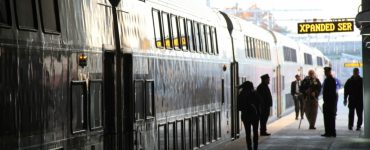
Commuter Rail train at T.F. Green Station

MBTA Commuter Rail train at T.F. Green Station. Photo from RIDOT.

The Governor, RIDOT, and the Rhode Island Airport Corporation announced today that MBTA commuter rail service to T.F. Green Airport’s station at the Interlink will almost double starting November 14th.

The biggest gripe about the Interlink service since it started last December has been the timing of the trains. Few people have been able to take advantage of the train service to connect to flights at the airport. The initial service was always set to increase once the station at Wickford Junction came online and initial service was more catered to commuters heading to Boston than to people needing to reach the airport. Wickford Junction station is slated to come online sometime in April (it is currently ahead of schedule!); this early boost in T.F. Green service is welcome news.

Continue Reading…

Providence Station

ProJo reports today that Rhode Island has been awarded $28 million in funds rejected by Florida. When Florida’s Governor, Rick Scott, rejected $2 billion dollars in high speed rail funding, awarded by the federal government, other states started scrambling to get a piece of it.

Rhode Island’s Senators Reed and Whitehouse applied for funds for 3 projects here. Two of those projects were awarded funding:

Rhode Island – NEC Kingston Track, Platform Improvements – $25 million for design and construction of an additional 1.5 miles of third track in Kingston, RI, so high-speed trains operating at speeds up to 150-mph can pass trains on a high-volume section of the Northeast Corridor.

Rhode Island – NEC Providence Station Improvements – $3 million for preliminary engineering and environmental work to renovate the Providence Station. These upgrades will enhance the passenger experience, keep the station in good working order and improve transit and pedestrian connectivity.

The Kingston project will allow for the commuter rail to be extended from Wickford Juntion, to Kingston, providing a rail stop for URI and allowing connections between its main and Providence campuses. As well as allowing for commuter transit for South County residents.

As for Providence Station, we’ll just talk about that in another post soon.