Archives For Economy

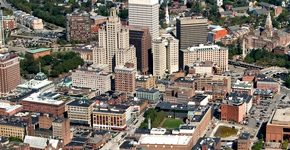
WPRI’s Ted Nesi speaks with Urbanophile’s Aaron Renn about the Providence metro area and economy on this week’s Executive Suite.

News & Notes

gcpvd —  January 17, 2013 — 5 Comments

→ GoLocalProv: Guest MINDSETTER™ Aaron M. Renn: My First Impressions of Rhode Island

Thinking about it this way, the basic problem of Providence (and by extension the rest of Rhode Island) becomes obvious: it is a small city, without an above average talent pool or assets, but with high costs and business-unfriendly regulation. Thus Providence will neither be competitive with elite talent centers like Boston, nor with smaller city peers like Nashville that are low cost and nearly “anything goes” from a regulatory perspective. There’s little prospect of materially changing either the talent/asset mix or the cost structure in the near term even if there was consensus to do so, which there isn’t. So expect struggles to continue, even if there’s a bit of lift from a change in national macroeconomic conditions.


→ DC Streetsblog: Will Massachusetts Tax Parking Lots to Fund Transit?

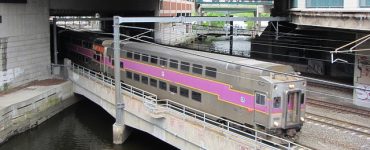
Here’s a transportation funding idea that aligns incentives nicely: taxing parking lots to pay for transit.

That’s what one former high-ranking state official is proposing for Massachusetts, ahead of a big announcement by the state Department of Transportation. Earlier this week Governing Magazine looked at the parking lot tax plan, part of a series of policy recommendations laid out by former Massachusetts Department of Transportation Secretary James Aloisi.


Continue Reading…

Notice of Regular Meeting
Tuesday, January 15, 2013 – 4:45pm
Department of Planning and Development • 1st Floor Meeting Room
444 Westminster Street, Providence

Opening Session

  • Call to Order
  • Roll Call
  • Approval of minutes from November 20th 2012 meeting – for action
  • Approval of minutes from December 18th 2012 meeting – for action
  • Director’s Report

Major Land Development Project

1. Case No. 12-011 MA – 257 Thayer Street (Final Plan Approval) The CPC approved the preliminary plan to construct a four story mixed use building with 95 dwelling units, underground parking and a landscaped courtyard in December 2012. The applicant is seeking final plan approval subject to fulfillment of preliminary plan conditions – for action (AP 13 Lots 42, 48, 104, 234, 235, 236, 237, 238 and 241, College Hill)

See also: UPDATED: Graduate student housing apartment building proposed on Thayer Street

Institutional Master Plan

2. Amendment of Providence College’s Institutional Master Plan (IMP) The applicant is seeking to amend the IMP to reflect the institution’s requests for street abandonments and changes to the Institutional Overlay Zone – for action (Elmhurst)

See also: Letter to the campus from P.C.’s President regarding their PILOT agreement

City Council Referral

3. Referral 3359 – Abandonment of portions of Huxley Avenue, Wardlaw Avenue and Cumberland Street Petition by Providence College to abandon Huxley Avenue between AP 119 lot 8 and lot 229 and Cumberland Street between AP 81 lot 189 and lot 195 and Wardlaw Avenue from AP 81 lot 186 to lot 189 – for action (Elmhurst)

4. Referral 3360 – Extension of I-2 overlay zone Petition by Providence College to extend the I-2[1] overlay district to include certain lots on Wardlaw Avenue and Cumberland Street – for action (Elmhurst, AP 81 Lots 186, 188 and 189-196)

See also: Presumed Parking Lot-ification

CPC Administration

5. Election of Officers Election of CPC officers – for discussion and action

Adjournment


[1] I-2 Educational Institutions – This zone is intended to permit higher education institutions and their expansion in a planned manner while protecting the surrounding neighborhoods. (Providence Zoning Ordinance)

It is that time of year for us to take a look back and What Cheer the good and What Jeer the bad.

whatcheerWork commences on the Washington Bridge Linear Park

It has been in the works for years, but finally RIDOT has started work on the Washington Bridge Linear Park.

Through a $22 million contract, RIDOT will rebuild the remaining section of the original Washington Bridge that carries the existing bikeway and a section of the original highway bridge. In the same footprint will be a much wider bikeway and linear park. It will feature a separate bikeway and walking path, scenic overlooks, park benches, flag poles, decorative lighting and landscaped planters. The project also calls for restoration of the historic, multi-arch granite façade of the Washington Bridge and two operator’s houses from which an original drawbridge was controlled.

When opened, the new linear park will be named the George Redman Linear Park, after the East Providence resident who was instrumental in making the East Bay Bike Path a reality 25 years ago. Redman continues to advocate for bike path development across the state.

whatcheerWind Turbines at Fields Point

While they were installed in January, the whole City was speculating when the would finally start spinning. Turns out they wouldn’t start up until October. But now they are finally spinning and adding some environmental goodness to the Providence skyline. Hope we’ll some more.

whatcheerOvernight parking expansion

While it has been studied endlessly for years (even as the rest of the world seemed to be able to embrace it and not devolve into chaos), in April, overnight parking has finally started spreading throughout the City.

Continue Reading…

News & Notes

gcpvd —  December 31, 2012 — 2 Comments

new-york-wetlands

Wetlands to provide a storm surge buffer for New York City. Image from Architecture Research Office

→ Fast Company: A Plan To Hurricane-Proof New York, With A Ring Of Wetlands

In the wake of Hurricane Sandy, there have been a flurry of ideas on how to deal with the prospect that storms of such magnitude may no longer be once-in-a-lifetime events but the most visible manifestation–if you’re not a polar bear–of the havoc wreaked by climate change.

Seawalls. Levees. The kinds of things the Army Corps of Engineers typically builds to protect low-lying places like New Orleans just aren’t feasible for a place like Manhattan, says Stephen Cassell, the cofounder of New York’s Architectural Research Office. “It’s hard to predict how bad climate change will be,” Cassell says, noting that Sandy’s devastating surge was nearly 14 feet, which wasn’t even the worst-case scenario. “What if we build a barrier and the surge goes beyond that?”

Yes Providence, what if the storm surge is higher than our storm surge barrier?


→ New York Post: Growing NY through smarter taxes

How might two-tiered taxation work? In New York, land and improvements in residential areas are subject to an 18.6 percent property tax.Thus, land with a taxable value of $10,000 would be taxed $1,860, and improvements with a similar taxable value of $10,000 would owe another $1,860, a total of $3,720. Under a two-tier system, the tax rate for land could jump by, say, 50 percent, while the rate for improvement could be halved.In that case, the owner would pay $2,790 in land taxes and $930 for improvements — keeping the total to $3,720.

But here’s the payoff: The owner’s tax bill under that scheme would climb another $2,790 if he purchased a second lot with a taxable value of $10,000 — but by only $930 if he used that money toward building.Thus, hoarding would be discouraged; development encouraged.

The two-tier property tax has a proven record of success. In 1979, Pittsburgh began taxing land at a rate six times higher than improvements. In the ensuing decade, building permits increased by 70.4 percent.

Via: Nesi’s Notes


Continue Reading…

The Huffington Post: A. Taveras – What the Fiscal Cliff Could Mean for My City

The fiscal cliff would have profound and draconian consequences for the City of Providence. If we go over the cliff, federal support for 21st Century Community Learning Centers will be cut by 20 percent which could force Providence to close up to four after-school programs that serve our highest-poverty neighborhoods. More than 100 young children could be denied access to Head Start — an early education program that helped me and so many other poor, young children start school ready to learn. More than 150 teachers could be locked out of high-quality professional development, putting our students at a disadvantage.

Beyond our schools, the fiscal cliff would cut energy assistance, elderly and handicapped transportation services, employment training and other vital services the newly reorganized Community Action Partnership of Providence provides.

This letter was sent to the Providence College campus by college president Rev. Brian J. Shanley regarding the college’s agreement with the City to acquire public streets in exchange for payments in lieu of taxes:

A Message to the Providence College Community:

Providence College is, and always has been, mindful of the significant role that the city of Providence plays in the decision our students make to attend this institution. Providence is a vibrant city with rich history, great restaurants, and myriad tourist and cultural attractions. It is both an alluring and attractive setting for our students and their families. As the leaders of all of Providence’s higher education and major healthcare institutions have noted on multiple occasions, a financially sound city of Providence is critical for the continued prosperity of each of our organizations going forward. With that in mind, I am pleased to announce that the College has reached an agreement with the City that will benefit both parties. The College has agreed to pay the City $3.84 million over a 10-year period to purchase portions of three City streets: Huxley Ave., which runs through the eastern end of the College campus, and both Wardlaw Ave. and Cumberland St. which are part of the northwest border of the campus across from Alumni Hall. (Specifically, the College will purchase Huxley Ave. from Eaton St. to Ventura St., Wardlaw Ave. from Lucille St. to Cumberland St., and Cumberland St. from Wardlaw Ave. to the property line at 30 Cumberland St.)

The College proposed the purchase of these streets in response to the City’s request for additional payments in lieu of taxes. As you may know, the City reached similar agreements of mutual benefit with Brown University, Rhode Island School of Design, and Johnson & Wales University earlier this year. Mindful of the City’s willingness to structure these agreements on a quid pro quo basis, and knowing that they were hopeful of striking some type of arrangement with all of the major non-profit institutions in Providence, the College felt this was the appropriate time to seek the purchase of these streets.

Continue Reading…

private-street

Photo (cc) Marcin Wichary

After Brown University and then RISD made agreements with the City to acquire parts of public streets for private parking in exchange for increased payments in lieu of taxes; GoLocal Providence reports that the City will make an annoucement tomorrow that Providence College has now made a similar agreement.

So all this begs the question, if you could buy a public street, which one would you want to buy and what would you want to do with it?

News & Notes

gcpvd —  December 4, 2012 — Leave a comment

→ DC Streetsblog: Obama Takes Another Swing at $50 Billion in Infrastructure Spending

President Obama is pressing for infrastructure investment again as part of the fiscal cliff negotiations. The president kicked off talks calling for an end to the debt ceiling, the extension of middle-class tax cuts, and $50 billion in infrastructure spending — a proposal that first arose last year as part of his ultimately unsuccessful American Jobs Act.

The Wall Street Journal called the President’s proposals “a particularly expansive version of the White House’s wish list” and “a potential starting point for negotiations.”

See also: Our favorite Obama quote from 2009


→ The Atlantic Cities: 10 Techniques for Making Cities More Walkable

In Jeff Speck’s excellent new book, Walkable City, he suggests that there are ten keys to creating walkability. Most of them also have something to do with redressing the deleterious effects caused by our allowing cars to dominate urban spaces for decades. I don’t necessarily agree with every detail, and my own list might differ in some ways that reflect my own experience and values. But it’s a heck of a good menu to get city leaders and thinkers started in making their communities more hospitable to walkers.


Continue Reading…

News & Notes

Jef Nickerson —  November 15, 2012 — Leave a comment

→ The New York Times: A Michigan City Bets on Food for Its Growth

The idea of building a year-round public market to tie the city’s skilled chefs to the region’s big complement of young farmers had already attained an air of inevitability by the time this Midwestern city held its first Restaurant Week three summers ago.

Next year, just in time for the fourth annual Restaurant Week, Grand Rapids is scheduled to open the $30 million, 130,000-square-foot Downtown Market, a destination that is expected to attract 500,000 visitors a year. The three-story brick and glass building, under construction in a neighborhood of vacant turn-of-the-20th century warehouses, is intended by its developers to be a state-of-the art center of commerce for the culinary arts and fresh local foods.

It is also seen as having the potential to accomplish much more.

My SimCity version of Providence in my head has a Public Market building on the parking lot next to Ri Ra, with through access from Burnside Park to Waterplace Park.


→ The Atlantic Cities: 5 Models for Cheaper, Greener Housing for Veterans

Earlier this year, I wrote about a terrific project providing apartments, supportive services and job training for veterans in central Milwaukee. On the green side, Veterans Manor earned a 92 out of a possible 100 points on a local “Green Built” standard, while enjoying a transit-accessible location with a Walk Score of 72. The building has a commercial kitchen that services both the residents and local schools while providing job training and experience.

When we discussed the statewide ballot questions the cost of the Veterans Home came up, $94 million bond. My other reservation about the Veterans Home was its location.

The WalkScore for the existing Veterans Home in Bristol is, “42 Car-Dependant.” A Veterans Home is populated by many elderly and disabled people, which is why they need a home, most of those people cannot drive. Additionally, services are provided for homeless Veterans who obviously cannot afford a car and need access to public transit and jobs.

If they were in a town center or near a bus line at least, they would have opportunity to leave the home and interact with members of the community, keeping them active and vital. Being stuck in a home on Metacom Avenue in Bristol is not the best we can do for our Veterans.


Continue Reading…