Archives For Housing

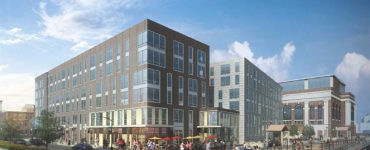
Rendering of Kettle Point by Union Studio Architecture & Community Design
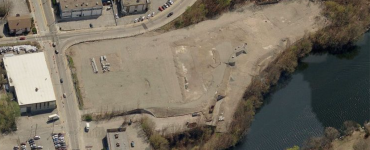
Tuesday night, the city’s Waterfront District Commission unanimously approved the 40-acre, 407-unit, $75-million Kettle Point development.
The project developer is Churchill & Banks of Providence. Richard Baccari II, the firm’s executive vice president, said that after state permits are obtained, construction would begin this summer. A year later, the first residents would arrive.
Mayor Menino and Governor Patrick announced The One Fund Boston, to raise money to help those families most affected by the tragic events that unfolded during Monday’s Boston Marathon. To contribute to The One Fund Boston, go to theonefundboston.org.→ The Atlantic Cities: How President Obama’s Budget Proposal Would Affect Cities
President Obama’s budget proposal for fiscal year 2014, released [last week], focuses on economic growth and a strong middle class. Better urban development isn’t the first item on that agenda, but it’s an important part of the administration’s priorities for the coming year.
Three agencies in particular are at the core of that work, with offices dedicated to making sure community development contributes to regional and national economic growth. The president’s 2014 budget would change how each of these agencies invest in community development.
→ The Atlantic Cities: New Chicago Plan: Pedestrians Come First
[I]n the Second City – as in just about every American metro – autos have long dominated city streets and how we think about who uses them, why they exist and what defines them as successful. This summer, though, Chicago is planning to roll out a small-sounding but seismic policy shift: From now on, in the design guidelines for every effort from major streetscape projects to minor roadside electrical work, transportation work must defer to a new “default modal hierarchy.” The pedestrian comes first.
Buffalo Metro Rail – Photo (cc) Sean_Marshall
→ The Buffalo News: Development soars along Metro Rail
The Buffalo Niagara Medical Campus is spawning a housing boom along the Metro Rail line, as developers look to provide lofts and apartments for some of the 17,500 workers expected to be employed there.
Note their take on parking:
The new downtown cluster will provide enough parking for patients and visitors, according to Medical Campus President Matthew K. Enstice. But because the campus would rather spend its resources on medical facilities than parking garages, planners are encouraging the big new influx of employees to use public transportation.
“This is how you force culture change,” Enstice said. “We’re actually doing it.”
Plans call for bicycle racks placed at strategic locations, rental-car checkouts for employees, and an interconnected and walkable campus that will encourage thousands of people to live in the city near Metro Rail.
The plan “has to work” because there is no alternative, Enstice said. There is no room to park 17,500 cars on the 170-acre Medical Campus.
Also, read Stephen Miller’s take on how Providence needs to be taking heed of what Buffalo is doing:
You can have a vibrant small city, or you can have cheap, ample parking in and around downtown. You cannot have both, for the simple reason that parking takes up a lot of space that would otherwise be used by people doing economically productive things. Buffalo seems to have learned this lesson. Providence, meanwhile, is drowning in downtown parking as the metro area’s economy stagnates.
Continue Reading…
→ The Atlantic Cities: The Great Senior Sell-Off Could Cause the Next Housing Crisis
In the 20 years between 1990 and 2010, these consumers [baby boomers] were at their peak family size and peak income. And suddenly, there was massive demand in America from the same kinds of people for the same kinds of housing: big, large-lot single-family homes (often in suburbia). In those two decades, calculates researcher Arthur C. Nelson, 77 percent of demand for new housing construction in America was driven by this trend.
“Ok, if there’s 1.5 to 2 million homes coming on the market every year at the end of this decade from senior households selling off,” Nelson asks, “who’s behind them to buy? My guess is not enough.”
Continue Reading…
Notice of Regular Meeting
Tuesday, February 26, 2013 – 4:45pm
Department of Planning and Development • 1st Floor Meeting Room
444 Westminster Street, Providence
Opening Session
- Call to Order
- Roll Call
- Approval of minutes from January 15th 2013 meeting – for action
- Director’s Report
Major Land Development Project
1. Case No. 12-011 MA – 257 Thayer Street (Final Plan Approval) The CPC approved the preliminary plan to construct a four story mixed use building with 95 dwelling units, underground parking and a landscaped courtyard in December 2012. The applicant is seeking final plan approval subject to fulfillment of preliminary plan conditions – for action (AP 13 Lots 42, 48, 104, 234, 235, 236, 237, 238 and 241, College Hill)
See also: UPDATED: Graduate student housing apartment building proposed on Thayer Street
Minor Land Development Project
2. Case No. 13-001MI – 55-57 Sprague Street and other sites (Preliminary Plan Approval) The applicant is proposing to construct a building with 21 dwelling units with a community room and agricultural green space at the site of 55-57 Sprague Street (M-1). The applicant is also proposing to construct townhouses with two to four dwelling units at proximate sites on 217-219 Dexter Street (M-1), 58-80 Diamond Street (M-1), 110-126 Wilson Street (R-3), 197, 196-202 Harrison Street (R-3) and 39 Westfield Street (M-1). The applicant is seeking preliminary plan approval. (AP 31 Lots 192, 252, 54 and 55 and AP 30 Lots 298, 293, 295, 296, 266, 674, 675 and 388, West End)
Adjournment
STATE HOUSE, Providence – A vacant house adjacent to the Salvatore Mancini Resource & Activity Center will be demolished tomorrow thanks to the efforts of Senate Majority Leader Dominick J. Ruggerio (D – Dist. 4, North Providence, Providence). After the town’s purchase of the property and transfer to the Mancini Center, the Majority Leader worked to find a construction company to demolish the house at no charge. Manafort Brothers, Inc. is volunteering to demolish the house. The Mancini Center will use the property for additional parking.

We ran down the list of 11 City of Providence ballot questions in a previous post, here are the statewide questions on the November 6th ballot.
Update: All statewide ballot questions passed however, voters in Newport rejected a casino at Newport Grand.
Find further details about each ballot question and information on how to vote in the Rhode Island Voter Information Handbook 2012
QUESTION 1:
1. STATE CONSTITUTIONAL APPROVAL
(APPROVAL OF AN ACT AUTHORIZING STATE-OPERATED CASINO GAMING AT TWIN RIVER IN THE TOWN OF LINCOLN)
(Section 22 of Article VI of the Constitution)
Shall an act be approved which would authorize the facility known as “Twin River” in the town of Lincoln to add state-operated casino gaming, such as table games, to the types of gambling it offers?
APPROVE
REJECT
QUESTION 2:
2. STATE CONSTITUTIONAL APPROVAL
(APPROVAL OF AN ACT AUTHORIZING STATE-OPERATED CASINO GAMING AT NEWPORT GRAND IN THE CITY OF NEWPORT)
(Section 22 of Article VI of the Constitution)
Shall an act be approved which would authorize the facility known as “Newport Grand” in the city of Newport to add state-operated casino gaming, such as table games, to the types of gambling it offers?
APPROVE
REJECT
→ UrbanTimes: 10 Ways to Improve Your City through Public Space
Public spaces are increasingly being recognized as a crucial ingredient for successful cities, and for their ability to revitalize and create economic and social development opportunities. But actually finding ways to build and maintain healthy public space remains elusive to many municipal governments, especially in the developing world. The vast web of streets, parks, plazas, and courtyards that define the public realm is often lacking, too poorly planned, or without adequate citizen participation in the design process.
Recognizing these challenges, the Project for Public Spaces (PPS) released earlier this month a draft of their handbook Placemaking and the Future of Cities. It’s intended to serve as a best practices guide for those wishing to improve the economic, environmental and social health of their communities through the power of successful public space.
→ VolumeOne: Successful Riverfront 101
Must-Have Items For A Great Waterfront Destination By Project For Public Spaces
Continue Reading…