Archives For Infrastructure


Mayor Angel Taveras

2013 State of the City Address

Providence Is Recovering

Tuesday, January 29, 2013 • (as prepared for delivery)

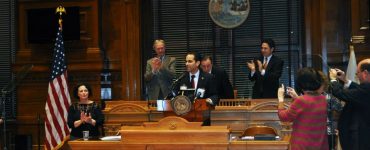
Photo of the Mayor delivering the State of the City from the Mayor's Office.

Photo of the Mayor delivering the State of the City from the Mayor’s Office.

Governor, Mr. President, honorable members of the Providence City Council, distinguished guests, and my fellow residents of our great Capital City –

One year ago I stood before you in this Chamber with an urgent message for our City and the entire State of Rhode Island. Providence was in peril. Despite many difficult decisions and painful sacrifices made to pull Providence back from the brink, we were still $22 million short of closing a $110 million structural deficit.

Crucial steps necessary to navigate our City safely through our Category 5 fiscal hurricane had not yet come to pass. We still needed to reform our unsustainable pensions. And we needed Providence’s large, tax-exempt institutions to contribute more.

As I stood before you on February 13, 2012, Providence was running out of cash, and running out of time. In the months that followed, there were some who said Providence could not avoid filing for bankruptcy.

BACK FROM THE BRINK

Today it is my privilege to deliver a much more hopeful report on the State of our City: Providence is recovering.

Through collaborative efforts and shared sacrifice, we have all but eliminated our City’s $110 million structural deficit, and we expect to end this year with a balanced budget. Working together, we have accomplished what few believed possible.

We were determined to address the root causes of Providence’s fiscal emergency and prepared to act unilaterally if necessary. And we knew our City would never achieve a lasting recovery without addressing our unsustainable and spiraling pension costs.

In April, following months of actuarial analysis and public testimony, this City Council unanimously approved a pension reform ordinance that put Providence’s pension system on a sustainable path.

We recognized that passing the ordinance would likely lead to a high-stakes lawsuit with no real winners – because a decision in favor of the status quo would push our City over the brink. However, faced with the challenge of negotiating pension changes with more than 2,000 retirees who were not represented by a single entity, we saw no alternative.

Continue Reading…

News & Notes

gcpvd —  December 4, 2012 — Leave a comment

→ DC Streetsblog: Obama Takes Another Swing at $50 Billion in Infrastructure Spending

President Obama is pressing for infrastructure investment again as part of the fiscal cliff negotiations. The president kicked off talks calling for an end to the debt ceiling, the extension of middle-class tax cuts, and $50 billion in infrastructure spending — a proposal that first arose last year as part of his ultimately unsuccessful American Jobs Act.

The Wall Street Journal called the President’s proposals “a particularly expansive version of the White House’s wish list” and “a potential starting point for negotiations.”

See also: Our favorite Obama quote from 2009


→ The Atlantic Cities: 10 Techniques for Making Cities More Walkable

In Jeff Speck’s excellent new book, Walkable City, he suggests that there are ten keys to creating walkability. Most of them also have something to do with redressing the deleterious effects caused by our allowing cars to dominate urban spaces for decades. I don’t necessarily agree with every detail, and my own list might differ in some ways that reflect my own experience and values. But it’s a heck of a good menu to get city leaders and thinkers started in making their communities more hospitable to walkers.


Continue Reading…

Transportation Issues Daily: President Proposes $50 Billion for Infrastructure

President Obama has resurrected his proposal to invest $50 billion in infrastructure and wants it included in the fiscal cliff deal. Republicans were immediately critical of the proposal.

Details were not released, but it is assumed that the proposal is similar to those previously announced by President Obama in 2010 and 2011. Those proposals have not passed the Democratic Senate or the Republican House. It’s debatable how hard the White House has pushed Congress to pass the proposal.

Streetcar!

News & Notes

Jef Nickerson —  November 26, 2012 — 1 Comment

→ The Atlantic Cities: Why Mayors Should Run the Department of Transportation

The transportation issues of the 21st century will be less about building new highways and more about building new transit, about offering more multi-modal options to bike and walk. Transportation policy going forward won’t just be about moving people as far and as fast as possible, but about leveraging transportation in service of economic opportunity and livable communities.

So here is one modest thought about who understands all of this as Obama searches for LaHood’s successor: mayors. There have been three former mayors at the helm of the DOT in the department’s 46-year history, most recently former San Jose Mayor Norman Mineta. As the agency further modernizes its mission, who better to take us there than someone who comes from a city?

I’m not sure I could even understand a world where L.A. Mayor Antonio Villaraigosa was not our next Transportation Secretary.


→ The New York Times: America’s Mid-20th-Century Infrastructure

Europeans visiting the Northeastern United States – and many parts of the East Coast — can show their children what Europe’s infrastructure looked like during the 1960s.


Continue Reading…

News & Notes

gcpvd —  August 28, 2012 — Leave a comment

→ Forbes: The Economic Secret of Vacant City Spaces

Most of us feel attached to our neighborhoods, but can this emotional connection help fuel local economies? According to a multi-year study by Gallup and the John S. and James L. Knight Foundation, the answer is yes: Communities with high levels of attachment actually have higher local GDP growth.

Surprisingly, the top factors that encourage community attachment are aesthetics and having spaces for people to socialize, according to 43,000 survey participants who ranked these factors above safety, education, and municipal services. But with foreclosures and vacant buildings and the resulting loss of tax revenue, how do you create and pay for public spaces?


→ Bloomberg: U.S. Taxpayers Are Gouged on Mass Transit Costs

American taxpayers will shell out many times what their counterparts in developed cities in Europe and Asia would pay. In the case of the Second Avenue line and other new rail infrastructure in New York City, they may have to pay five times as much.


Continue Reading…

dean-street-2009

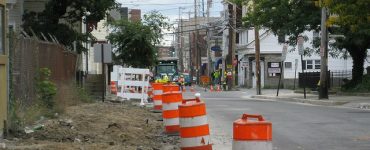
Dean Street re-construction in 2009. The City of Providence proposes a $40b bond to finance repairs to 62 miles of roads and sidewalks in the City.

As reported by Ian Donnis on RINPR, the City Council is meeting tonight to put a provision in the proposed roads bond bill that would give them control over what streets and sidewalks get repaired in their Wards:

RINPR quotes Councilman Terry Hassett:

That was one of the concerns among the council members — making sure that anything that is distributed through a bond for infrastructure that the council member has a direct and specific role in terms of what streets would get done, what sidewalks, and where the emphasis should be. That was the concern.

Dan McGowan of GoLocalProv Tweets the move could result in a Mayoral veto:


Why? Because there has already been a systematic review of roadways in the city that need attention and 62 miles of roadways have been identified as the ones which will be worked on should this bond pass (I hope to see that list before I’m asked to vote on the bond). The Council argues that they know best what their Wards need. What they know best is which streets getting paved get them the most votes towards reelection.

There’s also the simple matter that the bond money should not be equally dispersed among the 15 Councilors. There are Wards that are in more need than others based on trucking, bus routes, sheer road miles, and other factors that mean they should get more or less money than other Wards.

The City has created a formula to rate roads and determine which need working on, there is no reason the Councilors need any more say over that. If they don’t agree with the formula, then address that, don’t say you get to pick and choose what needs doing under some, “trust me, I know what’s best for my Ward,” song and dance.

See also: RINPR: Providence City Hall slams council faction’s plan for allocating road repair money

ProJo: Providence mayor proposes borrowing $40 million to fix streets

Mayor Angel Taveras, who was warning that the city was close to bankruptcy four months ago, now wants to borrow $40 million to repave 62 miles of streets and make other infrastructure improvements.

News & Notes

gcpvd —  February 29, 2012 — Leave a comment

500 days of summer park bench

Photo (cc) jaywei80

→ The Atlantic Cities: In Defense of Loitering

Not long after American inner cities started to empty of street life in the 1960s and 70s, government officials went for the benches. Benches encourage people to sit still. And sitting still is a quasi-crime in urban America commonly known as “loitering.” You may recognize its related anti-social behaviors: standing still, milling about and strolling a little too slowly.

It’s hard to remember how we got here, to criminalizing a leisurely pursuit that’s embraced on most European streets. But the cycle went something like this: Residents moved out of cities and stopped using their public spaces and streets. The only people still walking them were deemed riffraff: the homeless, jobless and, officials feared, gang members and prostitutes.


→ San Francisco Chronicle: Privately owned public spaces: Guidance needed

The Roof Terrace at One Kearny shows why we’re lucky that San Francisco requires downtown developers to provide space in their projects that is accessible to the public at large.

It also is a case study in why the generation-old guidelines must be improved.

Privately managed “public” spaces are one of the things being discussed for 195 land development. The spaces would offset the large footprints of lab buildings, and provide open space that the City would not have to pay to maintain. However, there are obviously lots of questions of accessiblity to answer.


Continue Reading…

News & Notes

gcpvd —  February 13, 2012 — Leave a comment

→ USDOT Fast Lane Blog: Budget reflects central role of transportation in the lives of Americans, in the vitality of our nation’s economy

It has been more than two years and four months since America’s transportation funding expired. Congress has extended the law with short-term patches eight different times. But, with bridges crumbling and highways choked with congestion, our nation needs the planning certainty that comes from a long-term transportation bill, a bill that puts people back to work rebuilding our roads, bridges, transit systems, and airports.

So today, President Obama outlined a six-year surface transportation proposal-part of his blueprint for an America built to last. The transportation budget the President proposed has three broad goals:

  • Creating jobs and investing in infrastructure for our future;
  • Modernizing transportation through focused research and technology; and
  • Pressing forward on our number one priority–safety.

→ The Atlantic Cities: Why In-Town Big Box Stores Might Not Be As Awful As You Think

City-dwellers love to rag on big box stores. They’re large and ugly and kind of dehumanizing. They require vast seas of surface parking. They sell the antithesis of the idealized urban shopping experience, in which a shopper on foot might hit multiple locally owned specialty shops for her hardware, her art supplies and her bubble bath.

What’s there to possibly like about the big-box alternative?

Well, here is one factor urban critics may not have considered: What if in-town big box stores encourage people to drive less?


Continue Reading…

News & Notes

gcpvd —  January 25, 2012 — Leave a comment

Texting while walking, via Transportation Nation.


→ Planetizen: The Smart Math of Mixed-Use Development

Most of us – city planners, elected officials, business owners, voters, and the like – understand that the city brings in more tax revenue when people shop and eat out more. However, we often overlook the scale of the property tax payoff for encouraging dense mixed-use development.

Many policy decisions seem to create incentives for businesses and property developers to expand just about anywhere, without regard for the types of buildings they are erecting. In this article, I argue that the best return on investment for the public coffers comes when smart and sustainable development occurs downtown.


Continue Reading…