Archives For Development

Executive Suite

This week on Executive Suite: Colin Kane, chairman of the I-195 Redevelopment District Commission, and Jan Brodie, the commission’s newly named executive director.

Kane and Brodie discuss the commission’s role in redeveloping the land, their vision for the area and their estimates of how long it will take to make significant progress. They also tackle questions about the interim use of the land and the possible broader impact on Rhode Island’s economy.

ProJo: Project for Kettle Point, long at rest, on the move

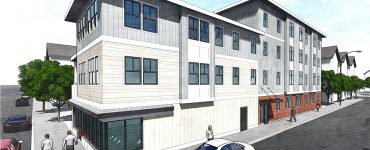
kettle-point-1

Rendering of Kettle Point by Union Studio Architecture & Community Design

Tuesday night, the city’s Waterfront District Commission unanimously approved the 40-acre, 407-unit, $75-million Kettle Point development.

The project developer is Churchill & Banks of Providence. Richard Baccari II, the firm’s executive vice president, said that after state permits are obtained, construction would begin this summer. A year later, the first residents would arrive.

Notice of Regular Meeting • Monday, May 13, 2013 – 4:45pm
Department of Planning and Development, 3rd Floor Conference Room, 444 Westminster Street, Providence

Opening Session

  • Call to Order
  • Roll Call
  • Approval of Meeting Minutes of October 15, 2012 and November 5, 2012
  • Acceptance of DDRC 2013 Meeting Schedule
  • Annual Election of Vice Chair

New Business

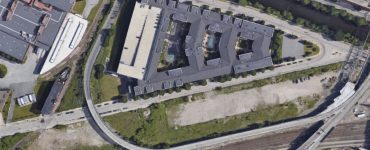
44-hospital

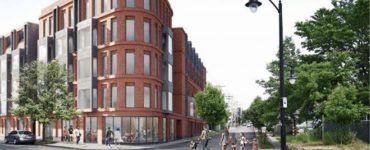
This building at 44 Hospital Street would be razed to make way for a 6-story apartment building. Image from Bing Maps

1. Pre-Application Review: 44 Hospital Street Proposal to demolish the existing building and construct a new 6-story apartment building. This item is for discussion only. No action will be taken by the DRC at this meeting.

Adjournment


See Also:

Providence Business News: Architecture firm files plans for Hospital St. apartments

Mayor Taveras joined Omni Group CEO William L. DiStefano, Jr. and others this morning to announce that company’s purchase and plans to redevelop the C.J. Fox Complex on Federal Hill.


From the Mayor’s Office:

Mayor Taveras and The Omni Group Announce $1.6 Million Purchase of C.J. Fox Complex in Providence’s Historic Federal Hill

Anticipated $5 million renovation will transform vacant factory into upscale office space.

Mayor Angel Taveras joined The Omni Group President and CEO William L. DiStefano, Jr., and Dominic Shelzi, executive vice president of The Omni Group, Economic Development Director James S. Bennett and other city officials today to announce the developer’s $1.615 million purchase of the C.J. Fox Complex, at Two Fox Place in Providence.

The Omni Group will soon begin a $5 million renovation of the vacant manufacturing complex to transform it into upscale office space.

The C.J. Fox Complex includes 70,000 square feet in four buildings and accompanying parking lots, located on 2.17 acres of land in historic Federal Hill. The Complex was formerly owned by the C.J. Fox Company, which manufactured tags and boxes for the fashion jewelry industry.

“The Omni Group’s redevelopment of the C.J. Fox Complex shows confidence in our capital city and a recognition of the incredible opportunities that exist here,” said Mayor Taveras. “We look forward to The Omni Group’s work to transform the Complex into a vibrant new center of commerce in Providence.”

The Omni Group has restored a number of properties in the Federal Hill neighborhood, including nearly six acres of the West Exchange Center, with nine office buildings and several parking lots. The developer also owns several residential properties in the area. Last year, The Omni Group adopted Garibaldi Park on Atwells Avenue and improved it with landscaping as well as a bandstand area.

“We originally purchased West Exchange Center because we felt that this part of Federal Hill had a great deal of potential,” said William L. DiStefano, Jr., president and CEO of The Omni Group. “It is within walking distance to Downtown Providence and Atwells Avenue, there is an abundance of parking, and there is easy access to all major highways. The project has had continued success year after year, and that, along with our optimistic view of the City’s future, is why we have decided to expand once again.”

“When developers and site selectors travel through Providence and see the transformation of these properties, it will send a strong message that we mean business here in Providence and that there is great potential for growth and economic success in Rhode Island’s capital city,” said Mayor Taveras.

Of course you may recall that the Omni Group has proposed an office building with two levels of parking at 50 Cedar Street as well as a two-level parking structure along two blocks of Cedar Street. Neither of those projects have broke ground yet.

taveras

Mayor Taveras unveiling his economic development plan this morning. Photo from the Mayor’s Facebook page

Mayor Taveras is unveiling his Economic Development Reportpdf.

Update: Media reports

Update: Press release from the Mayor’s Office

Pledging Action, Mayor Taveras Outlines Plan to Grow Providence’s Economy

‘Putting Providence Back to Work’ report presents roadmap to improve the business climate, infrastructure and human capital in Rhode Island’s Capital City

PROVIDENCE, RI – Mayor Angel Taveras today announced a 20-step economic development action plan to put Providence residents back to work and jumpstart the economy of Rhode Island’s Capital City.

The Mayor said that Providence’s economy must be built on the success of a broad range of industries and sectors, and pledged swift action to improve Providence’s business climate, infrastructure and human capital.

“When we work together, we can compete head to head with any city or state in this country,” said Mayor Taveras. “Nothing will change minds about Providence as much as continuing our track record of success.”
The Mayor outlined five immediate steps his administration will pursue to support and grow Providence’s economy:

  1. Freeze the commercial tax rate – The Taveras administration will work with the Providence City Council to enact a seven-year commercial real estate tax freeze that guarantees consistency and stability for developers in Rhode Island and beyond.


    “Freezing our commercial property tax rate will send a message that Providence is serious about attracting new business. We look forward to the day when economic growth in our City enables us to actually lower Providence’s commercial rate,” Mayor Taveras said.
  2. Fix the City’s Permitting Process – Contained in the FY14 budget that Mayor Taveras will present to the City Council next month are two positions to staff a new unit in the Department of Inspections and Standards focused solely on reviewing and approving small-permit applications of under $100,000. These small projects account for 75 percent of all permit applications in the City.


    Additionally, this summer the City will move its permit application process online. For the first time, developers will only need to log onto the City’s website to apply for a permit and get status updates on their applications.
  3. Remove Barriers to Redevelopment – The City will conduct an inventory of all major properties in need of redevelopment. For properties that are not defined as historic landmarks, the City will put on a fast-track for approval all projects to replace existing structures with new construction.

    “We recognize that the City has an important role to play in facilitating new development. It is time to get cranes in the air and put people to work rebuilding our city,” Mayor Taveras said.
  4. Develop Surface Lots Citywide – To stimulate real estate development and ease the crunch on parking downtown, the Taveras administration will work with the City Council to provide tax stabilizations to developers who commit to new development on existing surface lots. New construction on an existing lot will be taxed based on the property’s current assessed value. This program will create jobs, incentivize new, mixed-use developments, and spur new investment on Providence’s major commercial corridors.
  5. Reinvent Kennedy Plaza – The City will work with the Downtown Providence Parks Conservancy, RIPTA and other public and private partners to reconfigure and reduce the number of buses in the Plaza and transform it into a pedestrian destination.

Continue Reading…

The Providence Journal: Future uncertain for empty icon

Bank of America confirmed Tuesday that it has moved the last of its employees out of the Art Deco skyscraper, which earned its nickname from its resemblance to The Daily Planet in the 1950s “Superman” TV series. The bank’s departure leaves a Jazz Age monument to Rhode Island’s industrial might, when it opened in 1928, as a virtual 26-story tombstone marking the state’s economic decline.

Tearing down the building for something more practical “is not an option,” said Fischer. Other alternatives “would not be good for the city,” he added, such as leaving it vacant or renovating it for offices, which would create a glut of office space and depress commercial rental rates.

Fischer called rental apartments “the highest and best use of the property,” bringing 500 more people to live downtown while creating at least a year and a half of construction work that would benefit the economy.

Boston.com: Superman building owner wants historic tax credits

The building has 350,000 square feet, and High Rock hopes to build around 290 apartments of various sizes, Fischer said. The first floor, which now includes a grand lobby with high ceilings and marble columns, could be used as a restaurant or other commercial space, but the rest would be residential, he said. Among the issues High Rock is looking at is how to address parking since the building does not have it, Fischer said.

benefit-street

Image from Google Streetview

A new building on the corner of Benefit and South Court Streets appears on the agenda for the Zoning Board of Reviewpdf on April 3, 2013.

WALTER L. BRONHARD: 159 Benefit Street (corner South Court St.), also known as Lot 65 on the Tax Assessor’s Plat 10, located in a Residential R-2 Two-Family Zone and within the College Hill Historic Overlay District; to be relieved from Sections 204.3, 304, 416.2 and 704.2 in the proposed construction of a new two-family dwelling. The proposed use is permitted as of right within the R-2 district; the applicant seeks a dimensional variance for relief from regulations governing substandard size lots, minimum lot area, minimum lot area per dwelling unit, height, side yards, architectural features and paving limitations. Further, a special use permit is being sought pursuant to Section 419.2 in order to provide a home occupation in each dwelling unit. The lot in question contains approximately 4,896 square feet of land area.

This location, lot 65, is next to the building which houses Geoff’s on Benefit. The lot extends above the retaining wall to a second surface lot off of South Court Street. We have not seen any drawings or plans for the proposed structure, so we can’t speak to that, however it is good to potentially see the one of the last surface lots on upper Benefit Street gone. Although the request for relief from “paving limitations” is worrisome.

It is actually rather surprising with considering housing prices on the East Side that this parcel remained undeveloped for so long.

Does anyone else have any more information on this proposed building?

News & Notes

gcpvd —  March 15, 2013 — 1 Comment

City at Dusk, Boston (seen from Cambridge), Credit: David Fox

Boston at Dusk. Photo (cc) David Fox for Massachusetts Office of Travel & Tourism

→ Bloomberg: Boston Booms as Workers Say No to Suburbs: Real Estate

“In the last 24 months, suburban tech firms have been looking to relocate into town,” said Andrew Hoar, president and co-managing partner at CBRE/New England, a joint venture partner with CBRE. “For many other markets it’s the other way around. The young graduates in this town don’t want to commute.”


→ The Atlantic Cities: The End of Federal Transportation Funding as We Know It

This month marks 120 years since the federal government got involved in funding road transportation. (Strange as it sounds, bicycle advocates did the bulk of the lobbying.) The original Office of Road Inquiry — today, the Federal Highway Administration — was a line item with a budget of $10,000. That was only enough money to build about three miles of road, and the office wasn’t empowered to build roads anyway, but states fought tooth and nail against giving the feds even this incredibly modest level of transport oversight.

Today the federal transportation program faces perhaps its greatest challenge since that shaky start. The most urgent problem is funding. The Highway Trust Fund that pays for America’s road and rail program is heading straight toward bankruptcy. For two decades politicians have refused to raise the 18.4-cents-per-gallon gas tax that populates the trust, even as it steadily loses purchasing power to inflation and fuel-efficient cars. The public has yet to embrace alternative funding sources — road fares or mileage fees on the user-pay side favored by economists; income taxes on the social welfare end — in part because people (mistakenly) believe they already pay a lot for transportation.

Continue Reading…

ProJo: [195] Land panel’s powers debated at redevelopment meeting

Tempers flared at a Route 195 Redevelopment District Commission meeting Monday night over how much control the land panel may ultimately have or whether it’s being asked to cede to the state some control granted to the commission by legislation that created the panel in 2011.

The commission is moving closer to taking control of about 20 developable acres of former highway land, but it did not cast a final vote Monday about whether to proceed with a bond sale that will allow that to happen.

The bond proceeds will pay for the final phase of the $623-million highway-relocation project — knitting together city streets to connect the old highway land with the rest of the city. In financing the highway project, the Rhode Island Department of Transportation pledged a local match to the Federal Highway Administration. The bond sale will raise that money and allow the DOT to transfer control of the land to the commission.

It is hard to sell the land when we haven’t even built the streets and the utilities to it.

Brown Daily Herald: Fee on non-R.I. Brown students proposed

Rep. John Carnevale, D-Providence and Johnston, introduced legislation in the General Assembly that would place a $50 fee per semester on every out-of-state student attending Brown, the Rhode Island School of Design and Johnson and Wales University Feb. 14. The money raised from this fee would cover the redevelopment of the land opened up by the relocation of I-195, an area each university included in the fee has expressed interest in acquiring. Carnevale said in a press release he chose to raise funds from these universities because he did not want the state to invest heavily in land that would ultimately benefit “wealthy institutions” more than taxpayers.

“If one of those schools buys some land today, relatively cheap, and sells it five years from now when the area is active and thriving, who will reap the profit? Not the taxpayers,” Carnevale said in the press release.

I’m not prepared at the moment to talk about how damn foolish I think this proposal is, but feel free to discuss amongst yourselves in the comments.