Archives For Traffic

2013-0131-atwells-dean

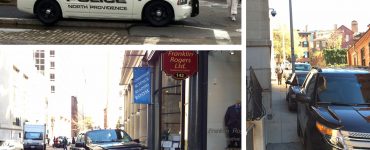
This police officer on her phone in her cruiser was no help to me as I was forced to play a real life game of Frogger crossing Atwells and Dean this morning when the traffic lights were out due to the storm.

The officer at Atwells and the Service Road was only slightly more helpful.

News & Notes

gcpvd —  July 2, 2012 — Leave a comment

→ Transportation for America: Newly approved transportation bill is a clear step backwards

Unfortunately, this final bill moves closer to the House’s disastrous HR7, which was too contentious and unpopular to garner enough votes to pass. This final negotiated bill has been called a “compromise,” but it’s really a substantial capitulation in the face of threats by the House to include provisions with no relevance to the transportation bill — the Keystone XL pipeline, regulation of coal ash and others.

As a result of this “compromise,” the bill dedicates zero dollars to repairing our roads and bridges, cuts the amount of money that cities and local governments would have received, makes a drastic cut in the money available to prevent the deaths of people walking or biking, and ensures that you have less input and control over major projects that affect you and the quality of your community.

Despite record demand for public transportation service, this deal cut the emergency provisions to preserve existing transit service, does little to expand that service and actually removed the small provision equalizing the tax benefit for transit and parking.

→ See also: Bike Portland: Why advocates are distraught over new transportation bill


→ Next American City: France Commits to Tramways, A Possible Model for the Future of Urban Rail

The appeal of tramways is easy to understand. The electric vehicles are silent, modern-looking and entirely flat-floor. Their tracks can be nestled in a lawn, creating a grass median through which trains run; if done right, they can be used as a tool to restore the beauty of an urban boulevard, rather than deface it, as do some light rail lines traveling on grade-separated track. In some cities, like Nice, Bordeaux and Orléans, vehicles have been designed with batteries that allow them to travel some distance (such as across a historic square) without the need for overhead messenger wire. In virtually every case, tramways in France have been specifically located on major bus corridors in order to replace overcrowded routes with higher capacity services.


Continue Reading…

Traffic Factor

gcpvd —  May 8, 2012 — 1 Comment

X Factor

Street closures and bus detours go into effect due to crowds attending the X Factor auditions at The Dunk. Sabin Street will be closed between Mathewson and Empire Streets, starting at Midnight, Wednesday May 9th and may remain in effect through Friday.

RIPTA has a full list of bus detours here.

Continue Reading…

Dean Street

Ramp from 6/10 Connector at Dean Street

I’m not sure if the Q&A on the RIDOT blog is a new feature, or something I’ve missed, but I read this item on April Fool’s Day and have to respond.

A commuter writes in to complain about the light at the top of the Dean Street ramp off the 6/10 Connector. The writer states that the light is remaining green for Dean Street even when no traffic is on Dean Street and the ramp traffic then backs up.

RIDOT responds (emphasis mine):

A: The traffic signal delays you experienced were due to the installation of new traffic signals. Once the project was completed and the vehicle detection function became operational, the department was able to fine tune and coordinate these two closely spaced traffic signals.

The volume of traffic that uses these intersections during the peak hours, however, may push the limits of the existing road’s capacity. Widening the bridge over Routes 6 and 10 and thereby providing more lanes along Dean Street would alleviate the congestion, but is unlikely to occur because of the department’s limited economic resources.

Continue Reading…

Traffic Tsunami?

Jef Nickerson —  September 28, 2011 — 39 Comments

Providence Emergency Management keeps posting this message on Facebook:

Traffic

I’ve commented in the past to seek clarification, what traffic? Where? How does one prepare? Is a hundred foot wave of cars set to strike the city that day? Should I buy D batteries or will the ones I have left from Irene suffice? Bread? Milk?

How much more unhelpful could that message be? Does anyone know what horrific fate awaits us as a city on October 3rd; and does anyone have any good advice on how we can survive?

The traffic lights have been removed at the intersection of Weybosset, Broad, Empire, and Chestnut Streets.
Traffic lights at the intersection of Weybosset, Broad, Empire, and Chestnut Streets on Weybosset Hill have been removed.

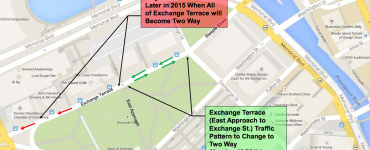
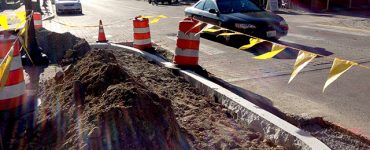
As part of the Downtown Circulator Project, the traffic light at the intersection of Weybosset, Broad, Empire, and Chestnut Streets (Weybosset Hill for short) have been removed. The roads will be rebuilt (with Weybosset and Empire both becoming two-way) and new lights will be installed, probably sometime this fall. Curiously, the intersection, which I walk through multiple times a day, has become much better without the lights.

Continue Reading…

News & Notes

gcpvd —  June 29, 2011 — 7 Comments

→ Across Europe, Irking Drivers Is Urban Policy [The New York Times]

While American cities are synchronizing green lights to improve traffic flow and offering apps to help drivers find parking, many European cities are doing the opposite: creating environments openly hostile to cars. The methods vary, but the mission is clear – to make car use expensive and just plain miserable enough to tilt drivers toward more environmentally friendly modes of transportation.


→ Some local greens on the Greenway [Boston.com]

A public food market in downtown Boston will feature up to 100 vendors of fish, produce, wine, cheese, and other local products in a facility that will feel more like a bustling European bazaar than a grocery store, according to an operating plan released by the state yesterday.

After years of false starts and dead ends, state agricultural officials unveiled a detailed layout and financial plan for the market that will operate out of a state-owned building on the Rose Fitzgerald Kennedy Greenway near Faneuil Hall and the Haymarket pushcart vendors.

Two words: Kennedy Plaza.
Two more words: The Arcade


Continue Reading…

Streetfilms MBA: Road Diet

gcpvd —  April 15, 2011 — Leave a comment


Streetfilms has launched a new series of videos, Moving Beyond the Automobile. As Streetfilms releases each video in the series, we’ll be posting them here for you to enjoy.

Continue Reading…

What Cheer/What Jeer 2010

gcpvd —  December 30, 2010 — 4 Comments

What Cheer/What Jeer was originally supposed to be a monthly, or a quarterly thing, but you know what, it is a lot of work putting a list like this together, so it has become an annual thing. So join us as we take a look back at 2010, What Cheering the good and What Jeering the bad.

whatcheerProvidence River Pedestrian Bridge

Whether you love it or hate it, Providence will soon be getting a new pedestrian bridge over the Providence River. Design firms large and small from around the world entered the competition that led to the winning design. And the competition got people around the city interested in transportation and design.

providence-river-pedestrian-bridge

whatcheerRIPTA

Last year we declared that 2010 would be “The Year of RIPTA” and not to be too smug about it but, we were kinda right.

In December 2009 RIPTA and the City of Providence released the Metro Transit Study, which drew a lot of attention to its proposal to run a streetcar line through Providence. This year, RIPTA embarked on their Core Connector Study, the first step toward bringing streetcars back to Providence. In June, U.S. Sec. of Transportation Ray LaHood visited Providence and was very excited about our future plans. RIPTA also took delivery of a new fleet of hybrid buses and trolleys in October. This year also saw RIPTA unveil a 5-year plan for the future of transit in Rhode Island. Finally, RIPTA hired a new CEO, Charles Odimgbe. It is early days yet in Mr. Odimgbe’s tenure, so it remains to be seen if he’ll be What Cheered or What Jeered next year.

Certainly all was not good for RIPTA this year, 2010 saw the continuation of an annual tradition wherein RIPTA’s budget falls short resulting in the agency looking to cut routes and/or increase fares. This year they went with increasing fares yet again. Here’s hoping the incoming Governor and General Assembly can work to address the issues surrounding RIPTA’s budget.

whatcheerElection 2010

What an exciting year that was. New Mayor, new Governor, new Congressman from Providence (even if he is a freshman and in the minority party, that’s good for us!), many new City Councilors, Shoveitgate, The Uncaucas, Chris Young… Let’s do that again real soon (well, not too soon).

whatcheerThe Interlink & MBTA to Warwick

October saw the opening of the long awaited Interlink. The skybridge connects T.F. Green Airport to a parking garage, rental car facilities, and a train station via a skybridge with moving sidewalks over Post Road. The Interlink opening was followed in December by the extension of MBTA Commuter Rail service from Providence to the station at the Interlink facility. Next year that service will be expanded and will go further south to a new station currently under construction at Wickford Junction.

Interlink

whatcheerThe Box Office

The Box Office was completed this year. The building, made out of shipping containers brought national attention to Providence within the construction and design communities for its innovative design. Developers from near and far want to replicate the building in their communities.

whatcheerThe Arts

We What Cheered the arts last year, and we’re What Cheering them again this year. Woonsocket’s Riverzedge and Providence’s Community Music Works each took home one of fifteen 2010 National Arts and Humanities Youth Program Awards (after Providence’s New Urban Arts won the same award last year (go Rhody!)). AS220 celebrated their 25th Anniversary this year, commissioned RISD alum Shepard Fairy to create a mural on Aborn Street, and is wrapping up renovation on its third Downcity Building, The Mercantile Block. And basically, art in Providence just continued to be pretty damn awesome. Buy Art!

Last year, we weren’t really in the mood to What Jeer, we had jeered enough I guess. But this year, oh, here go hell come, are you ready? Let’s do it.

whatjeerRIDOT

RIDOT, seriously, you’re killing us here. While we’ve said it time and again, we really like what Director Michael Lewis has to say about not being able to build more highways to end congestion and needing to be multi-modal and what not… the Director’s words have not been matching the agency’s actions.

From the craptacular original design of the Wickenden Street intersection related to the 195 Relocation, to the ridiculous placement of signs on the sidewalk on the Friendship Street bridge, to the utter disregard for any mode other than automobiles in the planning of the new Union Avenue Bridge, and more, RIDOT has proven that they have a long way to go in understanding how to build infrastructure in an urban environment and serve a multi-modal population.

Governor-elect Chafee has decided to keep Director Lewis on at RIDOT, a decision we agree with. Let’s hope that the Director can make the agency’s actions match his own and the Governor’s visions for how our transportation system should look. We’re hoping next year we might be able to What Cheer RIDOT.

whatjeerThe Arcade/35 Weybosset

Though these are separate properties, they are linked in the public consciousness and the destiny of each may best be served by thinking of them together. The What Jeer here is pretty obvious, the Arcade still sits empty and the facade at 35 Weybosset Street remains neglected.

The neglect of the 35 Weybosset facade is the clearest example available of a developer attempting a demolition by neglect, and he is beginning to get a lot of support for that option, though we clearly think there is a better way.

As for the Arcade, we might have to agree with one of our commenters that the best course of action is eminent domain.

whatjeerGrove Street School

Seeing as the Grove Street School’s current owner, Michael Tarro won election to the General Assembly, the school’s future seems more tenuous than ever.

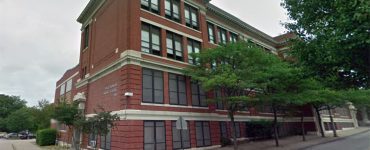
Grove Street School

The good news is, the new City Councilor for Ward 13, Bryan Principe is an ardent supporter of the building. Let’s hope Bryan and the new Mayor can work on an arrangement with Mr. Tarro on the building’s future.

whatjeerCVS

While in the end, CVS agreed to some minor concessions on their initial proposal for a CVS in Edgewood, they’re still basically dropping a box from the sky into the middle of a parking lot. We still don’t know why CVS hates Rhode Island.

whatjeerUnion Wadding Mill Fire

Did they ever catch the bastard who did this? There’s a $10,000 reward you know.

Photo from Pawtucket Foundation Facebook Page

whatjeerParkinglotification

Last year we What Cheered the Smith-Mathewson Building proposed for where the Downcity Diner used to be. This year it is a parking lot. Sigh.

whatjeerAtwells Avenue

As if enduring 14 months of construction at the intersection with Dean Street wasn’t bad enough, at the other end of the Avenue we had a girl who works at a Salon and a City Councilor run down by errant drivers within weeks of each other. We all know which one got the most attention from the media, including us.

After years of people getting hit on Atwells, to the point where those of us who live up there see it as part of life, the hit and run of Councilman Hassett did serve to jolt us all out of our malaise on the topic. After years of inaction we now have some repainted crosswalks, more signs, and a speed bump at the western end of the Avenue (where most of the pedestrians have been struck). Much more needs to be done to improve the safety situation not just on Atwells, but on roads throughout the city.

Let us not fall back into our malaise where we accept people being struck by cars as an inevitable part of city life, it is not. Let us make sure that we follow through on the outrage that followed the Councilman’s injuries and act to do all we can to ensure that it does not happen again.


We could probably go on, but let’s wrap up the What Cheering and What Jeering there. Feel free to add you own in the comments.

Thank you to everyone who reads and contributes to Greater City: Providence. It was a great year discussing the city we all love.

Happy New Year!

News & Notes

gcpvd —  December 7, 2010 — 9 Comments

→ Tootling [The New Yorker]

“At twenty [mph], you’d actually save time,” King said. “Going forty miles per hour doesn’t change your position in the next queue, at the next traffic lights.”

“You’re right,” DeCarlo said, and he nodded. “I’m a firm believer that, whether you do twenty or fifty-five, you’re going to get to the same place at the same time.”

→ New York Expands Pop-Up Cafe Program in 2011 [The Architect's Newspaper]

The concept is simple: street space is limited and valuable. To that end, New York has been evaluating whether the highest and best use for street space along narrow sidewalks is storing cars. Like a glorified Park(ing) Day spot made (semi-)permanent and held on high, these pop-up cafés invite pedestrians to imagine their city in new ways.

→ Dreyfus Tees Up Center Leg Freeway [DC Mud]

Washington, DC developers plan to deck 3 blocks of the Central Leg Freeway which separates the city. When they are done, they are welcome to come to Route 95 in Providence.

→ Pedestrians take to the streets; motorists learn to coexist [New Urban Network]

Monderman advocated getting rid of the welter of traffic signs, pavement striping, and other devices intended to regulate conflicting modes of traffic. He believed that human beings — whether in motor vehicles, on bikes, or using their own two feet — could intuitively adjust their movement and manage to cross the streets and squares safely.

Monderman operated mainly in small towns, where traffic tended to be light. There it was fairly easy to count on pedestrians and motorists to keep an eye on one another, thus avoiding accidents. By contrast, Hamilton-Baillie has introduced the shared-space idea to streets in the center of a great metropolis — London.

→ US shared space: Starting small [New Urban Network]

Cambridge created two shared-space streets, both in 2008. The first was on Winthrop Street adjoining Winthrop Park, not far from Harvard Square. It’s a narrow, minor street near restaurants. People were already walking in the street, so it was a natural to be officially designated a shared space. A sign identifies it as shared by pedestrians and vehicles, with a posted speed limit of 10 mph.